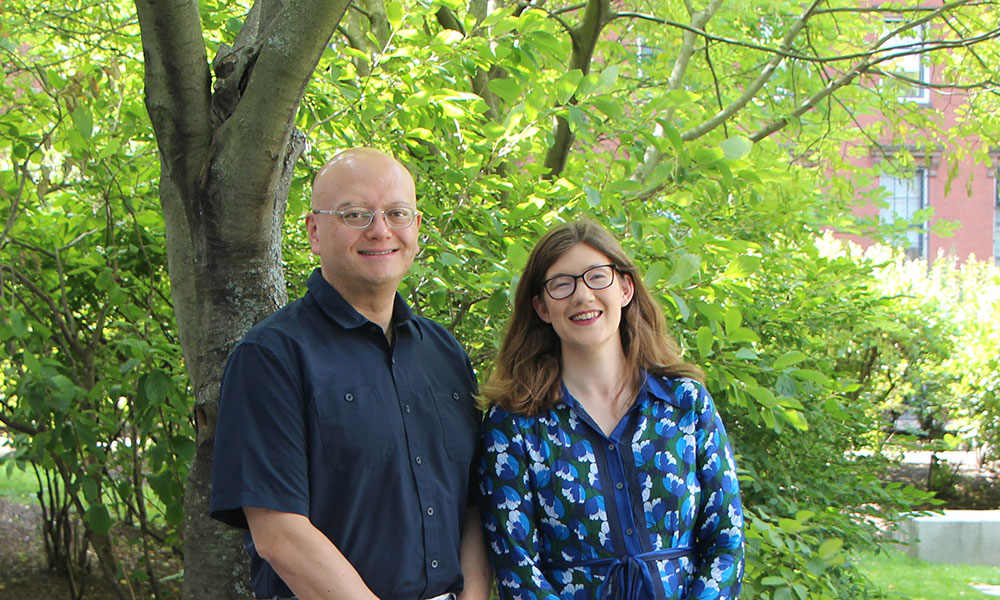

MCB researchers show GABA-based sedation in newborns speeds up brain development, confirming decades of animal research in a human cohort.
A new longitudinal study led by MCB’s Takao Hensch in children that had to have surgery as newborns provides compelling evidence that repeated exposure to general anesthesia can prematurely trigger critical periods of development where the brain is more susceptible to drastic changes in response to the environment and may carry long-term consequences.
The research, published in the Proceedings of the National Academy of Sciences, is the first to directly confirm in humans what animal models have predicted for decades: that early and repeated use of GABA-active drugs can prematurely trigger critical periods of brain plasticity, the ability to strengthen or weaken connections in the brain as a result of experience.
“This work demonstrates the value of animal research for understanding human development,” said Hensch, a leading authority on the neurobiology of critical periods. “Without the foundation from mouse studies, we would never have known what to look for in these children.”
The findings are based on a prospective cohort study of more than 100 infants at Boston Children’s Hospital who underwent non-neurological surgeries shortly after birth—procedures such as hernia repair or esophageal atresia correction that required extended sedation using GABAergic anesthetics like sevoflurane and propofol.
The researchers tracked the children’s neurodevelopment from infancy through two years of age, measuring visual-evoked potentials (VEPs) to assess brain maturation. They found that children exposed to repeated or prolonged anesthesia as newborns exhibited accelerated development of visual cortex responses—a signature of mature sensory function.
“In our earlier animal studies, we showed that giving Valium, a GABA boosting drug, to immature mice opened their critical period for visual development prematurely,” said Hensch. “We saw the same thing in these children. The VEP waveforms became mature much earlier than expected.”
While previous clinical studies such as the MASK, PANDA, and GAS trials had examined the cognitive effects of anesthesia in children, they were limited by design. The PANDA and GAS trials focused on single, brief exposures and found no significant long-term deficits. However, the MASK study, looking at children with multiple exposures, did find lower scores in reading and fine motor skills at school age.
What Hensch’s study adds is mechanistic insight: how and why early anesthesia exposure may impact the developing brain, and when the risk is greatest.
“Our study is unique in that it focuses on the early neonatal period of development—the earliest window after birth when the brain’s excitatory and inhibitory balance is still maturing,” said Hensch. “If you intervene with GABA-active drugs during this window, you’re effectively shifting the whole timeline of brain development.”
This shift may not be immediately evident in behavior, but it could have ripple effects later in life. Critical periods, which are biologically timed by the slow maturation of inhibitory circuits, occur in sequence across brain regions—basic auditory, visual, language, higher cognitive circuits and so on. “If primary systems mature too early, but downstream connections aren’t ready yet, that could lead to cascading effects and potentially contribute to complex cognitive disorders like autism,” Hensch noted. Conversely, the team has also learned that if there is a genetic predisposition for delayed inhibitory circuit maturation, early repeated anesthesia might potentially be therapeutic.
Translating Decades of Animal Research to Human Benefit
Hensch’s lab has spent nearly three decades uncovering the biological basis of critical periods—windows of time when the brain is especially responsive to experience. One of their most influential discoveries was that it’s not the more abundant excitatory neurons, but rather a minority population of inhibitory neurons using the neurotransmitter GABA, that triggers these windows to open.
“This was a big surprise,” said Hensch. “Everyone thought inhibitory neurons simply suppressed excess activity. But it turns out they’re the gatekeepers of plasticity. Once they mature, the brain becomes malleable—and then, eventually, the window closes again.”
That closing, too, turns out to be an active process. In more recent work, Hensch’s team has identified “brakes” on plasticity—gene programs that switch on to suppress further change after the critical period. Removing those brakes in adults, the team has shown, can reopen plasticity and even reverse certain deficits, such as amblyopia (“lazy eye”), once thought to be treatable only in childhood.
This new study raises the flip side of that finding. “If you open the window too early—before the brain is developmentally ready—you may accelerate closure as well, and lose opportunities for optimal wiring,” said Hensch.
The study’s first author, Laurel Gabard-Durnam, represents another kind of success story. A former undergraduate in Hensch’s MCB146 course, she credits the class with setting her career in motion.
“She kindly attributes her career trajectory to that course,” Hensch said with a smile. “She went on to complete a PhD at UCLA and Columbia, returned to Boston for her postdoc with Chuck Nelson and me at Boston Children’s, and is now a faculty member at Northeastern.”
Hensch emphasizes that this work would not have been possible without the collaboration of Boston Children’s Hospital. “We were able to follow patients from the newborn stage up to two years old through a pandemic. And we’re currently working to bring back the same kids at age six to look for any lasting effects.”
Rethinking Clinical Practice
While the researchers stop short of calling for a ban on anesthesia in newborns—since the surgeries are life-saving—they do urge caution and a reevaluation of best practices.
“Clearly, surgery is necessary,” said Hensch. “But perhaps we might consider using anesthetic agents that are not GABA-active in the first few weeks of life, wherever possible.”
The study also reinforces a broader point in an era of increasing scrutiny of animal research: such work remains essential.
“The NIH has recently restricted funding for research involving animals only, unless there’s a human component,” Hensch noted. “But this study would never have happened without decades of basic research in mice. It’s a perfect example of why we need both.”
The next step for the Hensch lab and its collaborators is to determine whether the early brain changes seen in this study are transient or if they set the stage for long-term cognitive impacts.
“By 10 months of age, the visual responses in these children are indistinguishable from untreated kids who have caught up,” said Hensch. “But this doesn’t mean the downstream wiring underneath hasn’t changed.”
With follow-up data on school-aged children expected in the coming years, the research could eventually influence pediatric anesthesia protocols and offer new insights into preventing neurodevelopmental disorders.
“Our hope is that we’re not just identifying a risk,” said Hensch, “but also providing a path toward safer practices and a deeper understanding of how the brain develops.”