
The formation of social hierarchies is a fundamental aspect of group living, reducing conflict and guiding behavior across species—from animals to humans. Yet, the precise neural and molecular processes that underlie this behavioral adaptation remain poorly understood. A paper from the lab of MCB Professor Catherine Dulac provides new clues.
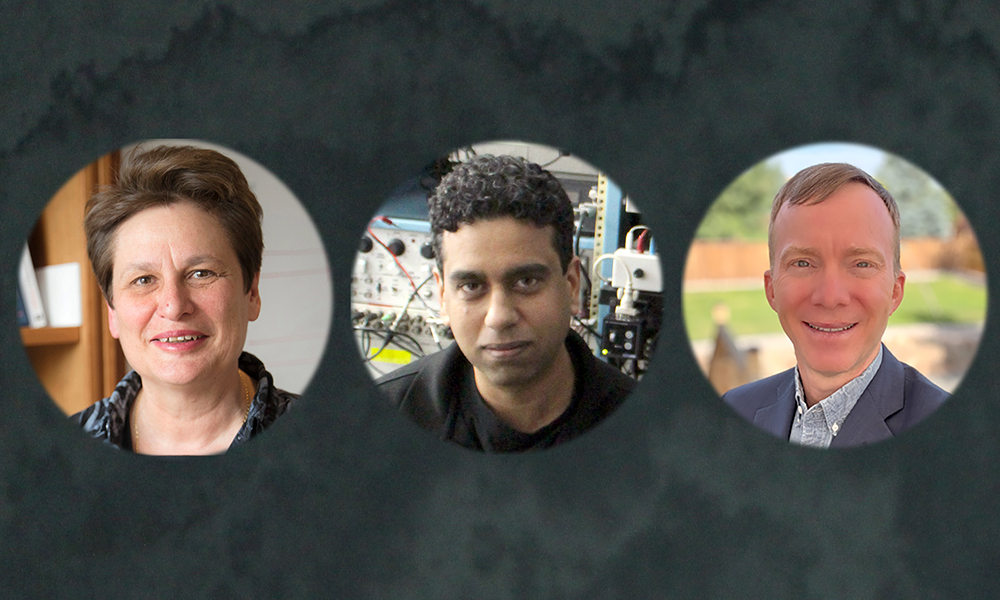
“In our new Cell study (PDF), we identify a brain circuit and molecular mechanism that become modified as animals establish their position within a social hierarchy,” says Dulac, whose team included co-first authors Adam Nelson, who now has his own lab in the Department of Zoology and Physiology at the University of Wyoming, and Vikrant Kapoor, staff scientist in labs of Dulac and Venkatesh Murthy. “Using rodent models, behavioral assays, molecular tools, and physiological recordings, we show how individual social rank is encoded in the brain and causally linked to changes in neuronal activity.”
The team’s first major finding centers on a key brain hub—the mediodorsal thalamus (MDT). During the establishment of dominance hierarchies, MDT neurons become more excitable in high-ranking animals, driven by increased excitatory input from the orbitofrontal cortex and reduced inhibitory input from the basal forebrain. This heightened excitability leads to feedforward inhibition of the cingulate cortex. “Using circuit manipulations, we show that activating MDT projections to the cingulate increases competitive performance in low-rank animals by suppressing cingulate activity, directly linking this pathway to social rank behavior,” Dulac explains.
A second key discovery was the identification of a calcium-permeable ion channel, TRPM3, which is more highly expressed in MDT neurons of dominant animals. Enhancing TRPM3 activity boosts neuronal excitability and, in turn, competitive success, establishing TRPM3 as a cellular mediator of rank-dependent behavior.
In studies to characterize hierarchy formation of unfamiliar mice, the team observed that submissive behavior was dynamic and context-dependent. Mid-ranking animals exhibited submissiveness toward higher-ranking peers but assertiveness toward lower-ranking ones. Using in vivo imaging, Dulac’s team linked this behavioral flexibility to distinct neural signatures: dominance was associated with prefrontal activation and cingulate suppression; submission showed the reverse.
“Together, our findings outline a rank-sensitive brain network that integrates inputs from cortical and subcortical regions to drive flexible social behavior,” says Dulac. The discovery of TRPM3 as a molecular modulator of this network provides a rare causal link between ion channel expression and complex social behavior.
Understanding how brain circuits enable flexible social behaviors is crucial for advancing treatments for neuropsychiatric conditions—such as schizophrenia, depression, and autism—that disrupt social functioning. Says Dulac, “Our work offers mechanistic insight into how status and social behavior are biologically encoded and manipulated, and highlights the MDT as a promising node for future therapeutic targeting.”