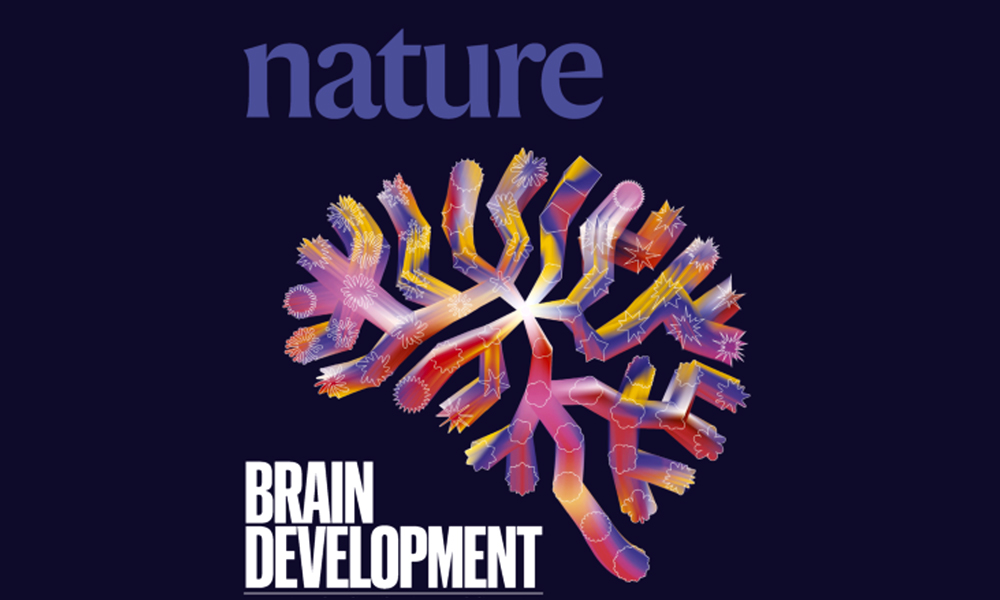

Researchers from the Brain Initiative Cell Census Network (BICCN) will release an extraordinary series of 16 manuscripts in Nature on November 5.. This collection, made possible by large NIH BRAIN Initiative consortium grants, represents a transformative effort to map brain development at single-cell resolution and to understand how individual cells that contribute to behavior and neural circuitry emerge during embryonic and postnatal development.
The BRAIN Initiative grants supported the work of many MCB researchers: Catherine Dulac, Florian Engert, Jeff Lichtman, Haim Sompolinsky, and Sam Kunes. Harvard’s Paola Arlotta (Department of Stem Cell and Regenerative Biology) and Xiaowei Zhuang (Department of Chemistry and Chemical Biology) also participated in the BRAIN consortiums. Their work, along with other teams across the BICCN network, helps weave together a comprehensive view of the brain’s cellular landscape, showing how detailed single-cell analyses can illuminate complex neural processes.
Among the Nature publications is a recent paper from the Dulac lab, which is one of the first to explore the development of instincts at the single-cell level.
Support from the BRAIN Initiative enabled my lab to tackle a fundamental issue about instinctive behavior circuits that I had dreamed for years to address: how and when are these circuits and associated neuronal populations emerging during development and are they influenced by individual sensory experience,” says Dulac. “Being part of a large consortium gave us the opportunity to discuss our ideas and data as they came about with many highly expert colleagues and get their feedback.
“We were very fortunate to be a part of this collaboration – not only for the funding, but also for the scientific network that it created,” adds Harris Kaplan, postdoctoral fellow in the Dulac lab who led the research published in the Nature paper. “This included monthly sub-group meetings focused on single-cell approaches to neurodevelopment, which were super important for me as a newcomer to the field to better understand my work both conceptually and technically.”
Together, these manuscripts demonstrate the enormous impact of strategic, large-scale funding and collaboration—turning cutting-edge technologies into insights that reshape our understanding of the brain.
This collection is more than just a set of papers—it’s a showcase of what happens when ambitious science, state-of-the-art technology, and cross-institutional collaboration come together to push the frontiers of neuroscience.