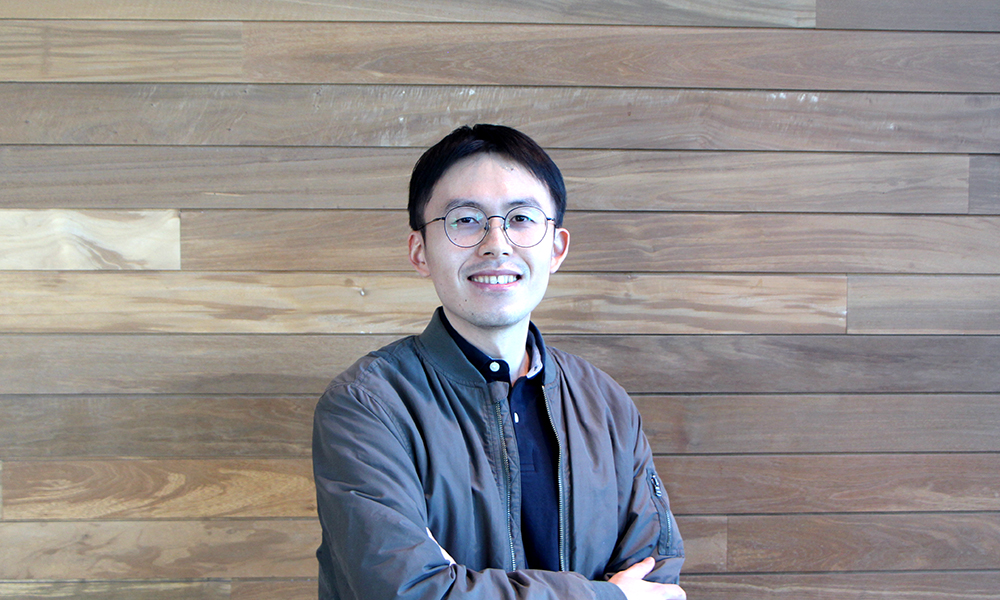

MCB is pleased to announce that Xueyang Dong, a postdoctoral researcher in the lab of MCB’s Kazuki Nagashima, has been selected for a prestigious Cancer Research Institute (CRI) Postdoctoral Fellowship. The three-year award will support Dong’s ambitious project to uncover how the immune system recognizes gut bacteria—and how those interactions might be leveraged to improve cancer immunotherapy.
Dong, who earned his PhD in Harvard’s Department of Chemistry and Chemical Biology, completed his graduate work in Emily Balskus’s lab, where he specialized in microbial chemistry and enzyme mechanisms. Joining the Nagashima Lab in March 2025, he saw an opportunity to bridge his deep expertise in microbiome chemistry with a new immersion in T cell biology.
“I wanted to learn something entirely new,” Dong said. “My background is in microbial chemistry, but immunology offers a precious opportunity to understand host biology more deeply. Cancer is such a difficult disease to combat, and I wanted to contribute to a field where new insights can make a real difference.”
His CRI-funded project aims to build high-throughput methods to systematically characterize how T cells recognize the gut microbiome—a step toward understanding how these interactions shape therapeutic responses in cancer. By clarifying how the immune system interprets microbial cues, Dong hopes to generate fundamental insights into the logic of microbiome–T cell interactions and inform the development of new therapeutic and preventive strategies, including the modulation of the gut microbiome to enhance cancer treatment outcomes.
“The mechanisms by which T cells recognize microbiota-derived antigens and the immunological consequences of these interactions for cancer development and therapeutic outcomes remain poorly defined,” Dong explains. This critical knowledge gap is due in part to the absence of scalable tools for mapping T cell receptor (TCR) antigen specificity in the complex context of the gut microbiome. “My proposed research addresses this limitation by developing a high-throughput antigen discovery platform to profile T cell specificity within complex microbial communities.”
Nagashima praised the boldness of Dong’s proposal and its cross-disciplinary reach. “Earning such a prestigious fellowship from a newly established lab is no small feat,” he said. “Xueyang’s creativity and bold vision—combining his PhD expertise in microbiome research with our lab’s focus on T cell biology—made his proposal stand out and exemplify the pioneering spirit of our group,
As he prepares to embark on the project, Dong says he’s motivated by the possibility of doing something that matters. “Cancer is a very hard type of disease to treat,” he said. “If understanding microbiome–immune interactions can help improve treatment outcomes even a little, that’s worth pursuing.”
MCB congratulates Xueyang Dong on this outstanding achievement and looks forward to the discoveries ahead.