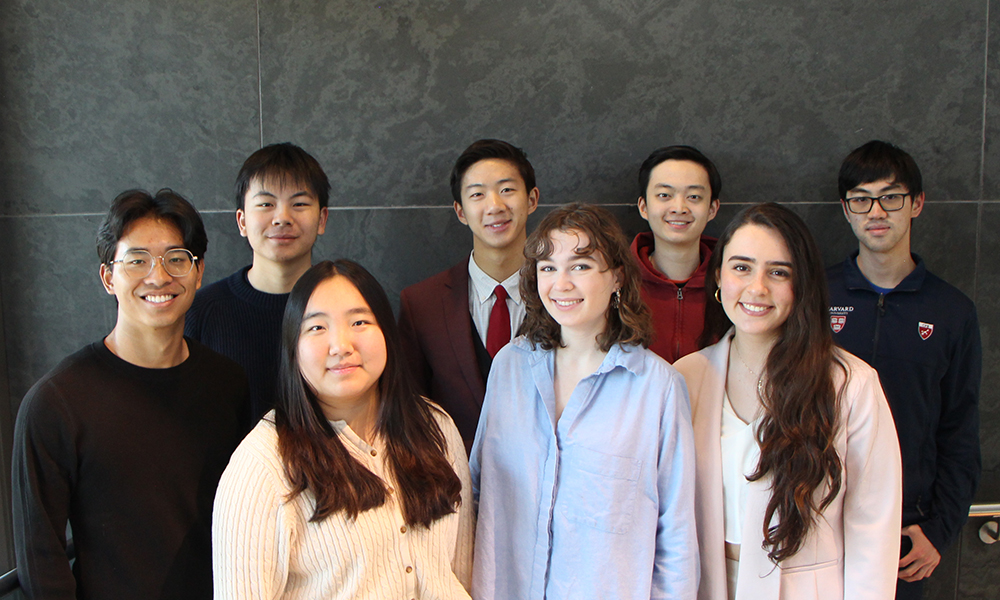

We are pleased to announce that the following eight seniors with concentrations in Neuroscience, CPB, or MCB have been nominated for membership in Phi Beta Kappa (PBK), the nation’s oldest academic honor society, recognizing excellence in the liberal arts and sciences:
Nicole Lu – Neuroscience/History of Science (double), secondary: Global Health & Health Policy
Alex Chou – Neuroscience/Government (double)
William Leung – Neuroscience/Government (double), secondary: Latino Studies
Austin Wang – CPB
Henry Chen – MCB/Anthropology
Frank Liu – MCB/English
Maria Alejandra Cuervo – MCB/Music
Rae Trainer – MCB/Psychology
Frank Liu
Liu works on computational viral phylogenetics with global health applications in Professor Pardis Sabeti’s lab at the Broad Institute. “To me, PBK feels like validation and recognition of my path through college, threading my interests in health, statistics, and English literature,” he says. “Through exploring various fields at the highest level, I’ve come to a holistic belief about the urgency of global health and the importance of scientific and media representation. I’m excited to continue working on global health research and education, especially with our lab’s partners in Sierra Leone.” He plans on pursuing an MD/PhD in English and integrating research on narrative medicine and textual theory into his medical practice.
William Leung
Leung is currently conducting research at Professor Steve Kohut’s Behavioral Neuroimaging Lab at McLean Hospital. “I feel like being elected to PBK is a validation of the broad academic exploration I have had the chance to do over the past few years across the sciences, social sciences, and humanities,” he says. He will be applying to medical school in the near future.
Maria Alejandra Cuervo
Cuervo is investigating the role of complement component 4 (C4) in schizophrenia pathology, working in the Stevens Lab at the Broad Institute, as part of the Stanley Center for Psychiatric Research. “Being elected to PBK is first a recognition of God’s grace in my life,” she says. “Second, it reflects appreciation for the work I’ve pursued with a genuine desire to learn as much as I can, and it is also a reminder of the responsibility to use the privileged education I’ve been given in the service of others.” She plans on pursuing a PhD where she wants to research the biological pathways underlying mental illnesses, with a specific interest in bipolar disorder.
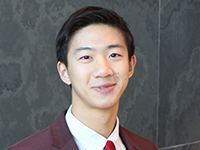
Alex Chou
Chou has worked in Professor Thomas Scammell’s lab at Harvard Medical School on the neural circuitry of narcolepsy. “While my core commitment lies in medicine and I am excited to help develop new clinical treatments or advance biotechnology, I recognize that successful integration of these tools into our communities via effective implementation and public understanding is equally crucial,” he says, explaining his interest in both government and neuroscience. “I am honored to be elected to PBK and value how this achievement encourages me to continue pursuing diverse disciplines.” Next July, Alex will attend the Icahn School of Medicine at Mount Sinai
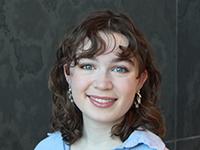
Rae Trainer
“I got my start in MCB taking LS50 and doing protein structural biology research with Dr. Rachelle Gaudet, who was an amazing mentor,” Trainer says, then moved on to explore an interest in psychology, retaining her curiosity about the driving forces behind biology. “Time and time again, the MCB department has supported me in taking risks to pursue fundamental questions, whether that’s how Gibbs free energy really works or how best to socially support people as they live with mental illness. Being elected to PBK affirms me in my decision to take those risks.” Rae plans on becoming a psychiatrist, a career path that she says she would have never discovered without risk
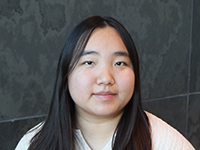
Nicole Lu
Lu is pursuing a double concentration in Neuroscience and History and Science with a secondary in Global Health and Health Policy. She conducts research in the lab of Lauren Orefice, where she studies the impact of chronic social isolation on somatosensory circuits.
“I am incredibly grateful to have the opportunity to study a wide array of subjects and merge my interest in systems neuroscience and social medicine,” she says. “This kind of intersectional study has really strengthened my commitment to understanding how structural racism poses a barrier to access to care. I hope to use research as a way to not only understand disparities in medicine, but to help ensure that healthcare is accountable to all of the communities who rely on it.”
She plans to work in clinical research and pursue a career in medicine.
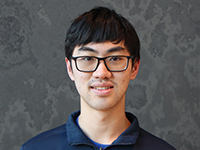
Austin Wang
Wang conducted molecular biology research on endocytosis with the Tomas Kirchhausen group and genetic research on pancreatic cancer in the Sahar Nissim Lab. “I’m very honoured to receive this award,” he says. “I look forward to improving myself and discovering new interests every day in the hopes of converting this honor into something tangible and beneficial to our society.”
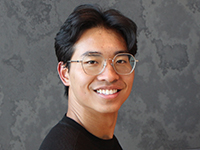
Henry Chen
Chen has been conducting research on Shigella bacteria in Cammie Lesser’s Lab, focused on uncharacterized proteins. “I’m really honored to be elected to PBK!” says Chen. “I’ve always thought a critical part of the Harvard education was to take classes that challenged me in fields that are familiar and comfortable to me, like biology and chemistry, while also exploring new topics that would deepen my liberal arts education and expand my ability as a student. As a result, it felt really great to be elected to PBK and have my dedication and work recognized!” Chen plans on pursuing a career in medicine.