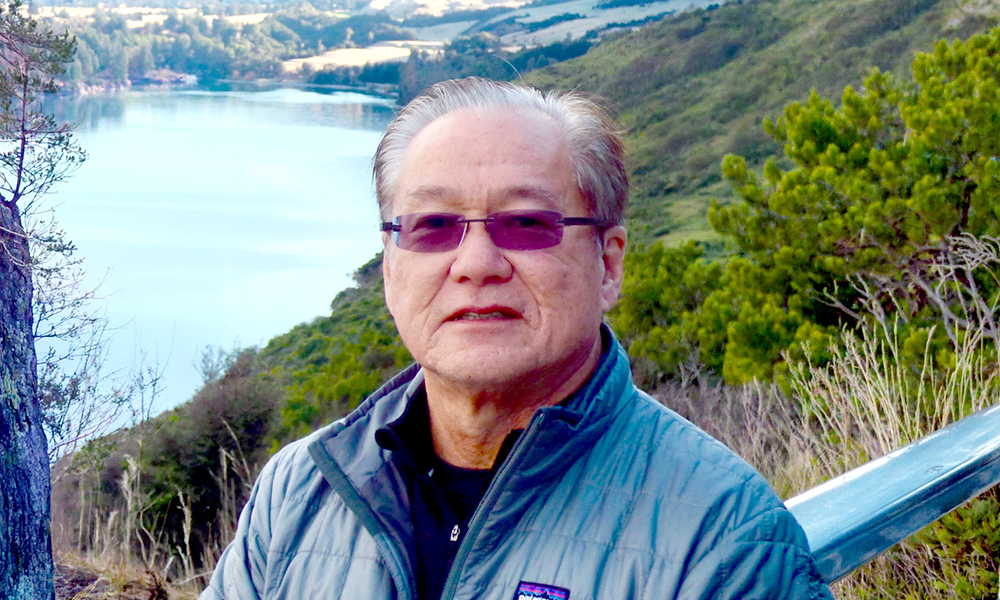

Joseph S. Takahashi, PhD, a pioneering researcher whose discoveries helped uncover the genetic mechanisms governing circadian rhythms, will deliver the Paul Doty Lecture on Thursday, October 8, at noon in the Northwest Building, Lecture Hall B101. Takahashi is the Loyd B. Sands Distinguished Chair in Neuroscience and Chair of the Department of Neuroscience at UT Southwestern Medical Center. His research focuses on the molecular mechanisms of circadian clocks, neuroscience, and the genetic basis of behavior.
His talk, “The Surprising Role of the Circadian Clock in Healthspan and Lifespan,” will explore emerging evidence that the biological clock does much more than regulate when we sleep and wake. Circadian clock genes interact with pathways involved in metabolism, immune and cardiovascular function, cell growth, and many of the biological processes associated with aging.
Takahashi pioneered the use of mouse genetics to discover genes underlying behavior and neurobiology. His discovery of the mouse Clock gene and subsequent identification of its human counterpart helped reveal a conserved molecular mechanism controlling circadian rhythms in animals. More recently, his laboratory has investigated how circadian clocks influence metabolism, aging, and longevity.
In his Doty Lecture, Takahashi will discuss research showing that not only what and how much we eat, but when we eat, can influence the effects of caloric restriction on lifespan. His laboratory has found that restricting the timing of food consumption and aligning feeding with the body’s circadian rhythms are important contributors to lifespan extension under caloric restriction.
The work has also raised the possibility that the circadian clock itself could become a target for promoting healthier aging. Circadian-driven gene activity declines with age, and Takahashi and colleagues are investigating interventions designed to restore the strength, or amplitude, of circadian rhythms as a potential way to improve healthspan and lifespan.
The lecture will be hosted by Takao Hensch, Professor of Molecular and Cellular Biology and Professor of Neurology at Harvard Medical School.
Following the lecture, a small group of graduate students and postdoctoral researchers will have an opportunity to join Takahashi for lunch.
Honoring Paul Doty’s Legacy
Paul Doty was the Mallinckrodt Professor of Biochemistry Emeritus and Director Emeritus of the Belfer Center for Science and International Affairs, which he founded at the John F. Kennedy School of Government in 1974. As a biochemist, Doty elucidated the structure and function of large molecules, ranging from the polymers in plastics and fibers, to polypeptides and polynucleotides. He is perhaps best known for demonstrating the denaturation of the double-stranded DNA molecule and its reuniting through hybridization, a technique that helped open the era of recombinant DNA research.
As an advocate for arms control, Doty led and participated in many initiatives to bring Russian and American scientists together in pursuit of international security, making more than 40 trips to the Soviet Union. He served on the President’s Science Advisory Committee (PSAC) during the Kennedy Administration. After retirement, he continued his work in this area, including serving as a board member of the Soros International Science Foundation that provided critical research support to Russian scientists in the 1990s. He passed away on December 5, 2011.
Paul Mead Doty (1920-2011) Science Retrospective, PDF