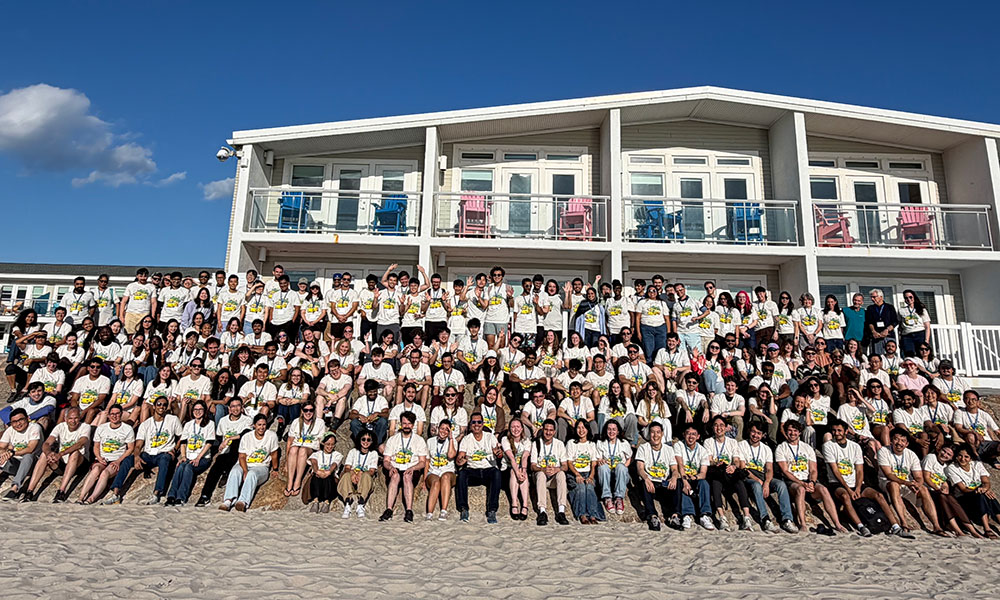

MCB faculty, researchers, and scientists gathered at the Sea Crest Beach Hotel in North Falmouth on September 18–19 for the annual MCB Research Retreat. This year’s theme, “Inspiring Science: Curiosity, Creativity, and Discovery in Molecular and Cellular Biology,” set the stage for two days of research talks, poster presentations, scientific exchange, and community activities.
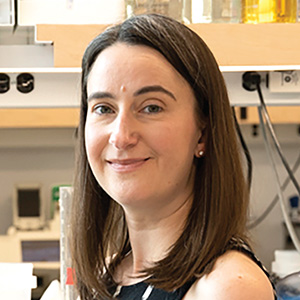
“This year’s theme, ‘Inspiring Science,’ celebrates the curiosity and creativity that drive discovery,” said MCB assistant professor Amanda Whipple, who chaired the retreat planning committee. “The retreat gives us a chance to hear exciting science from across MCB, reflect on how new ideas and unexpected findings shape our work, and strengthen the connections that make our department such a vibrant scientific community.
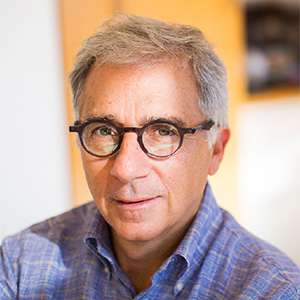
The program featured three sessions of research talks, two poster sessions with 65 presentations, and a keynote address by former MCB faculty member Doug Melton, PhD, along with longstanding retreat traditions ranging from the faculty versus first-year MCO student volleyball game to the MCO G3 skit.
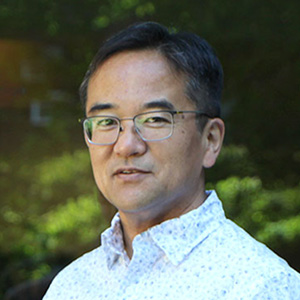
“The talks were very exciting, and there were plenty of good—and some not-so-good—jokes that made the retreat fun,” said MCB Chair Naoshige Uchida. “Doug Melton’s keynote was especially timely and inspiring. I also encouraged everyone to use the retreat as an opportunity to thank the MCB staff for the excellent support they provide, not only for the retreat but in our everyday work. Overall, the retreat was a great success and connected people in ways that we simply can’t achieve on campus.”
Friday Highlights
Friday opened with the introduction of the new MCO G1s, followed by the first scientific session.
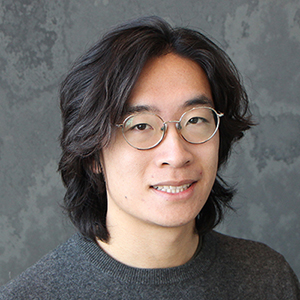
Alex Chen of the Engert Lab presented “Visual Startle,” while
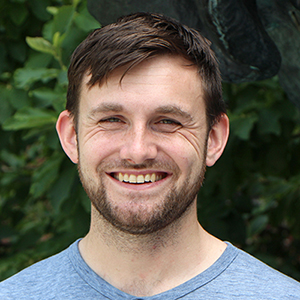
Max Coyle of the Bellono Lab spoke on “An Ancient Receptor Lineage Illuminates the Evolution of Animal Sensation.”
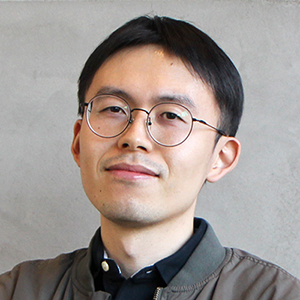
Xueyang Dong of the Nagashima Lab presented “Mapping T Cell Antigens in the Human Gut Microbiome,” and
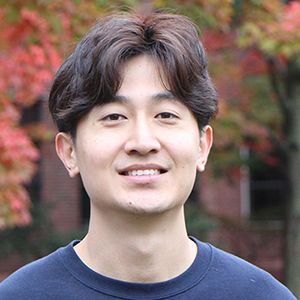
Jaeeon Lee of the Uchida Lab discussed “Distinct Modes of Reinforcement Learning Underlying Stability-Flexibility Tradeoff.”
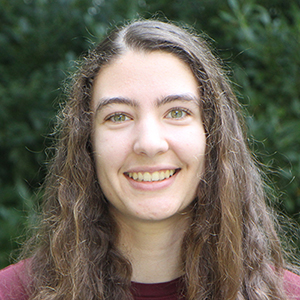
After lunch, the second scientific session featured Maya Waarts of the Needleman Lab, who presented “Mechanics of Spindles in Human Cells: Characterizing the Forces that Segregate Chromosomes,” and
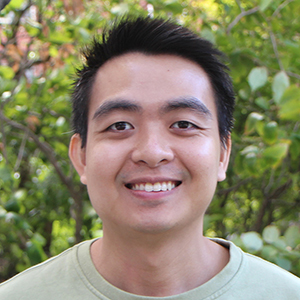
Duy Diep of the Chung Lab, with “Identification of an ERGIC-Localized Lipid Surveillance Pathway that Maintains Golgi Lipid Homeostasis.”
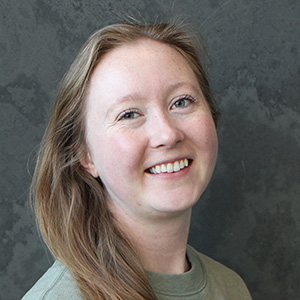
Margaret Doyle of the Prigozhin Lab presented “Cryo-vitrification of Thick Samples at Atmospheric Pressure,” and
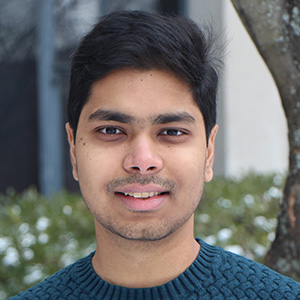
Kumar Sarthak of the Eddy Lab discussed “A Probabilistic Alignment Approach to Protein Sequence Identification from Noisy Nanopore Signals.”
Doug Melton Returns to MCB as Keynote Speaker
A highlight of Friday’s program was Melton’s keynote address. Now a Catalyst University Professor at Harvard and Distinguished Research Fellow at Vertex, Melton delivered “Cells as Living Medicines: An Alternative Approach to Treat Diabetes.”
Melton discussed how stem cells have been used to generate functional pancreatic islets in vitro, providing new insights into how cell fates are determined while raising the possibility of treating diabetes through transplantation of insulin-producing cells rather than daily insulin injections. His career—spanning fundamental biology and translational science over decades—also closely reflected the retreat’s focus on how curiosity and unexpected findings can shape the course of scientific discovery.
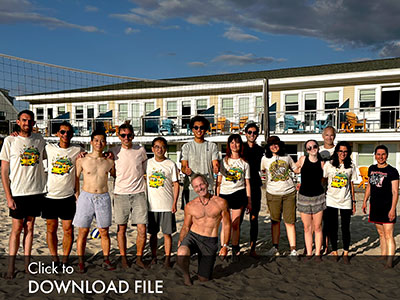
Following the keynote and the annual group photo, MCO first-year graduate students faced MCB faculty in the retreat volleyball game, while other attendees could choose yoga or free time. Dinner featured a spin on the traditional skit with an exciting Bingo Game led by MCO G3s.
The first of the weekend’s two poster sessions followed dinner, with desserts and drinks accompanying discussions of research from across MCB and affiliated laboratories. The evening continued with PowerPoint Night, a beach fire pit, board games, and a DJ party.
Saturday Science
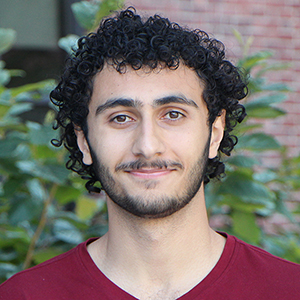
After an optional Pilates class and breakfast, Saturday’s scientific program began with Hisham Tadfie of the Nett Lab presenting “Repurposed Enzyme Families in Lobelia Latex Cells Biosynthesize Neurotoxins.”
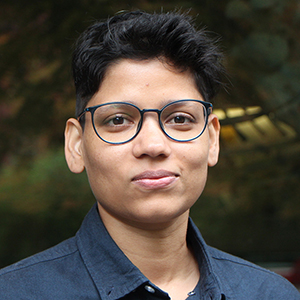
Purnati Khuntia of the Rowland Fellows presented “Nuclear Compression as a Driver of Neurogenesis: Lessons Across Taxa,” followed by
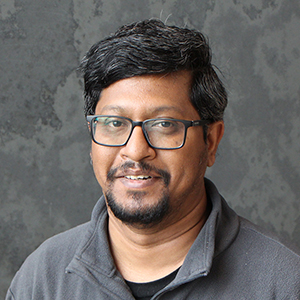
Mostafizur Rahman of the Dulac Lab with “Implementing Parenting: From Molecular Identity to Circuit Dynamic.”
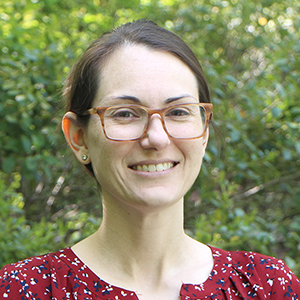
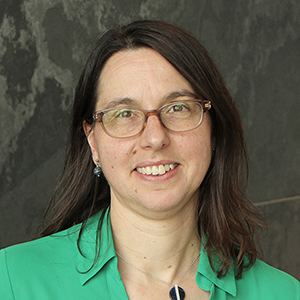
The morning also featured a pair of “flipped talks” by Carolyn Elya and Rachelle Gaudet. The research highlighted in their presentations included Elya’s “Determinants of Metal Import and Specificity in an Nramp-Family Metal Ion Transporter” and Gaudet’s “Death at Sunset: Mechanisms Driving Robust Daily Timing of Death in Entomophthora muscae-Infected Fruit Flies.”
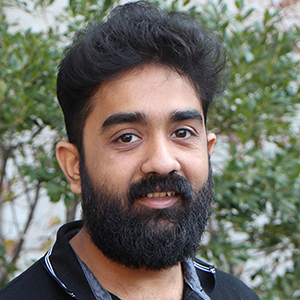
Rounding out the talks were Piyush Nanda of the Murray Lab, who presented “Geometric Control of Peptide-Activated Fungal GPCRs,” and
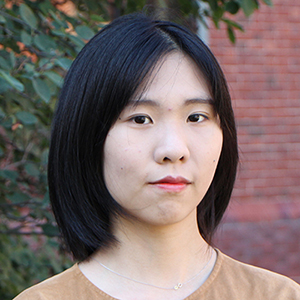
Jia Yin (Sally) Xiao of the Ginty Lab, who discussed “Maturation of the Tactile Sensation in the Genitalia Through Hormonal Regulation of Krause Corpuscle Development.”
The second poster session followed the talks. Across the two sessions, 65 researchers presented posters, providing a broad look at ongoing work throughout the MCB community.
Awards and Recognitions
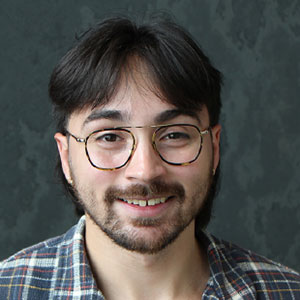
The retreat concluded Saturday with awards and closing remarks, including recognition of Alan Baez Vazquez, an MCO graduate student in the Franklin Lab in Harvard’s Department of Stem Cell and Regenerative Biology, as the recipient of the 2026 Peralta Essay Award. His winning essay, “A Pas de Deux,” uses a dance metaphor to explain his research on how the immune response to influenza is coordinated with the repair of damaged lung tissue.
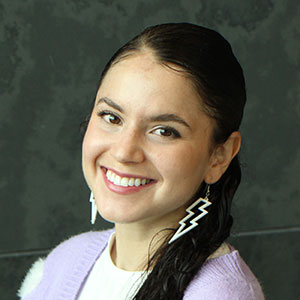
Isle Bastille, a postdoctoral fellow in the Bellono Lab, received the Meselson Prize for an experiment that reduced the complex biology of plant-fungal symbiosis to a remarkably simple test. Bastille, who shifted from neuroscience to studying mycorrhizal fungi, is investigating the molecules and receptors that enable fungi and plant roots to recognize and communicate with one another.The work has led to the discovery of a new family of fungal receptors involved in symbiosis, with potential implications for understanding ecology, sustainable agriculture, and plant disease.
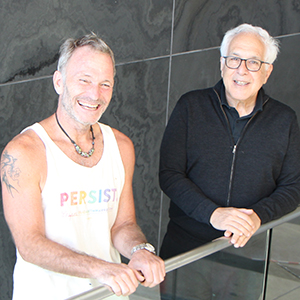
The Bjorkman-Strominger-Wiley Prize for Collaboration, which recognizes innovative collaborations between Harvard labs, went to Florian Engert and Jeff Lichtman for combining their labs’ complementary approaches to create a vertebrate connectome encompassing both the brain and body.
Following lunch, awards, and closing remarks, attendees had one final opportunity to enjoy the beach before boarding buses back to Cambridge—bringing to a close a weekend that showcased both the breadth of research underway across MCB and the community behind it. And MCB will be back: the 2027 Research Retreat is scheduled for September 17–18 at the Sea Crest Beach Hotel in North Falmouth, returning to the same Cape Cod location for another year.
Special thanks go to the retreat planning committee: Amanda Whipple (Chair), David Nelson, Maxim Prigozhin, Polina Kehayova, Brittany Walsh, Jessica Manning, and Francisco Arellano. Additional appreciation goes to MCB administrative staff members, Katie Scrocca, Lindsay Guest, as well as the MCB Graphics team.