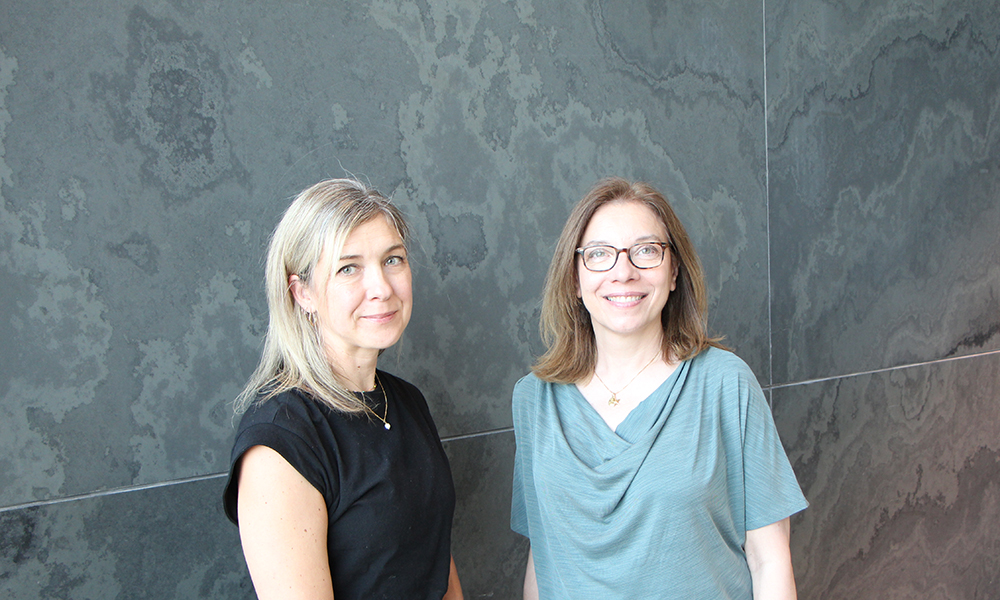

Two MCB curriculum and pedagogy managers have been recognized for their dedication to undergraduate education and student mentorship, highlighting the department’s ongoing commitment to excellence in teaching and advising.
Katie Quast has received the Anya Bernstein Bassett Excellence in Education Award, a university-wide honor recognizing outstanding contributions to teaching and student learning.
Quast, who teaches the introductory neuroscience course Neurobiology of Behavior 80, said her teaching philosophy centers on making challenging scientific concepts accessible and engaging for all students.
“My focus is always really trying to break down and to be able to explain complicated neuroscience concepts to all students,” Quast said.
Since joining the Neuro 80 teaching team in 2017, Quast has helped redesign the large introductory course, which enrolls approximately 270 undergraduates each year. Her work has included transforming the class. “I’ve done a lot with the course design, making it a hybrid course, breaking down lectures into shorter, bite-sized lectures, and then really making the lecture part very interactive,” she said. “Bringing in demonstrations — we have a neuroscience activity fair.”
In addition to her work in Neuro 80, Quast has helped create foundational undergraduate learning experiences outside the traditional classroom. She previously co-led the freshman seminar, How to Think Like a Neuroscientist, with Venkatesh Murthy, and is now helping expand the Fundamentals of Undergraduate Experiences in Labs (FUEL) summer program. The nine-week initiative gives rising sophomores hands-on exposure to neuroscience research techniques and inquiry-based projects within Harvard teaching labs. Quast said the expanded program will now include a neuroscience track for approximately half of participating students.
For Quast, the award reflects not only her own work but also the support of the department community. “It’s a big honor because the department nominated me, and it’s university-wide,” she said. “That’s great recognition.”
Quast said the most rewarding aspect of teaching remains helping students build confidence in understanding difficult material.
“I do really enjoy teaching,” she said. “I love being able to break down complex ideas, working with students so that they can learn and move forward from there.”
Monica Boselli, curriculum and pedagogy manager and instructor in MCB, has received the Thomas Dingman Award for First-Year Advising, recognizing her commitment to mentoring and supporting undergraduate students as they begin their academic journeys at Harvard.
The honor follows Boselli’s earlier recognition for advising excellence from Harvard’s Advising Programs Office. Boselli said the latest recognition was especially meaningful because it came through nominations connected to the Harvard Undergraduate Association and reflected the experiences students have had working with her over time. “I think it reflects more the fact that they had a positive experience with me,” Boselli said.
Boselli became a pre-concentration advisor three years ago, and many of her former advisees stay in touch, sharing updates about their paths and continuing their conversations with her even after they declare their concentrations and move into later years of study.
A molecular biologist by training, Boselli works with students interested in STEM and life sciences fields. She said effective advising requires more than helping students navigate academic requirements. “I think there is a lot of listening involved in advising,” she said.
“One component is the academic advising—discussing the Harvard curriculum requirements—but it is also important to listen and help students articulate not just their goals, but also why they want to pursue a particular academic interest, so that we can advise them properly”.
Boselli said those conversations often help students better understand both their academic interests and themselves. “At the end of the day, advising is really just advising in the sense that it’s their decision,” she said. “It’s really about empowering them to do what they want to do.”
While Boselli began advising students in 2023, she has also been teaching large undergraduate life sciences courses, including LPS A and LS 1b, where students frequently sought guidance on careers, academic direction, and the broader purpose of their studies. “I found myself giving, having those advising conversations with students in the course,” she said. “I wanted to do a better job with it.”
She credited Harvard’s advising community with helping faculty advisors better support students and said mentorship is an essential part of the undergraduate experience. “As an institution that is so well renowned and has such a wealth of knowledge, I think it’s important to share it,” Boselli said. “That’s kind of why we’re here.”