Sleep is one of the major remaining mysteries in biology. Although we spend a third of our life asleep, it is still unclear why we sleep and how…
100 years biochemical sciences tutorial


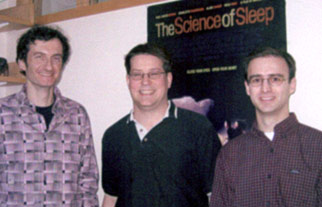
Sleep is one of the major remaining mysteries in biology. Although we spend a third of our life asleep, it is still unclear why we sleep and how…
Co-authors and contributors (l to r): Vishal Trivedi, Eva-Maria Frickel, Martha Gorczyca, Jatin M. Vyas, Adam B. Costoreno, Axel Nohturfft and Shao Chong Zhang. Around the turn of…

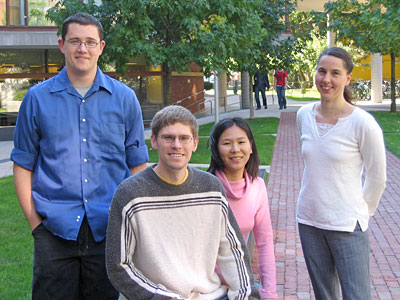
Authors Ian Errin-O'Connell, Eik Procko, Sze-Ling Ng and Rachelle Gaudet In nearly all human cells, TAP, the ABC Transporter associated with Antigen Processing, transports small antigen peptides across…
A model for feedback control of spindle checkpoint activity Feedback control of spindle checkpoint activity. (Left) Prior to metaphase, chromosomes that are incorrectly aligned on the mitotic spindle…


Co-authors Andy McMahon (left) and Stephen Rodda The mammalian skeleton is important for many physiological functions; as a scaffold, it supports the body, enabling motion and mechanical loading,…
Authors Ayellet Segrè and Andrew Murray Life exists in an impressive variety of forms, but the processes responsible for generating all that variation typically take far longer than…

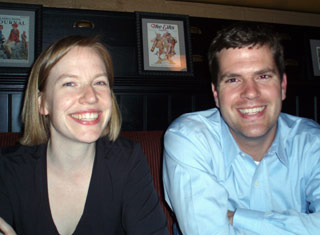
Co-authors Amy Wagers and Kevin Eggan One of the central dogmas of mammalian reproduction is that females are born with a fixed pool of meiotic germ cells in…
Left to right: Xi Chen, Jack Strominger and Konrad Krzewski Natural killer (NK) cells comprise a relatively small subset of lymphocytes (~15%). Nonetheless, they play a very important…


When animals meet, how do they distinguish friend from foe? Such determinations must be made quickly, since any delay could mean a missed opportunity, but also accurately, since…
Co-authors Tehyen Chu and Sam Kunes One of a cell’s fundamental tasks is to deliver its synthetic products to subcellular locations appropriate for their function. Nowhere is this…
