Four MCB community members—Julien Barrere, Xiaomeng Han, Neha Karlupia, and Catherine Weiner—have been honored with teaching certificates from the Bok Center for Teaching and Learning. Awarded to only…

100 years biochemical sciences tutorial


Four MCB community members—Julien Barrere, Xiaomeng Han, Neha Karlupia, and Catherine Weiner—have been honored with teaching certificates from the Bok Center for Teaching and Learning. Awarded to only…
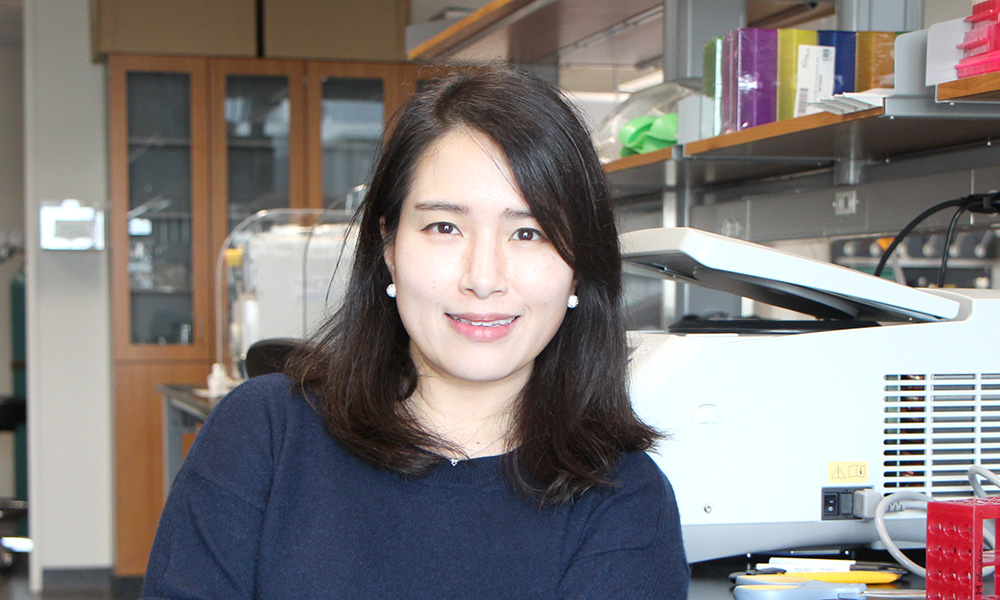
Nature Cell Biology (PDF) has published a paper authored by MCB faculty Jeeyun Chung. The study outlines a role for the protein spartin in breaking down subcellular organelles…

The Burroughs Wellcome Fund (BWF) has chosen postdoc Luis Hernandez-Nunez of the Engert Lab as a recipient of its prestigious Career Awards at the Scientific Interface (CASI) grant.…
On August 1, Hopi Hoekstra will become the next Edgerley Family Dean of the Faculty of Arts and Sciences. Hopi Hoekstra Hoekstra Lab


Specializing in education was not part of Alia Qatarneh’s plan. After graduating with a bachelor’s degree in biology from Northeastern, she planned to continue down the traditional academic…
Phyllis Zhang (Chemistry & Physics and Computer Science '23) and Ziyuan Zhao (Chemistry & Physics and Computer Science ‘23) from the Hekstra Lab have been awarded the prestigious…


MCB HR Coordinator Camila Ossa has been named as a recipient of the Dean’s Distinction, one of the most prestigious honors awarded to Harvard staff members. MCB community…
[caption]Link to photo[/caption] [caption]Link to photo[/caption] [caption]Link to photo[/caption] [caption]Link to photo[/caption]
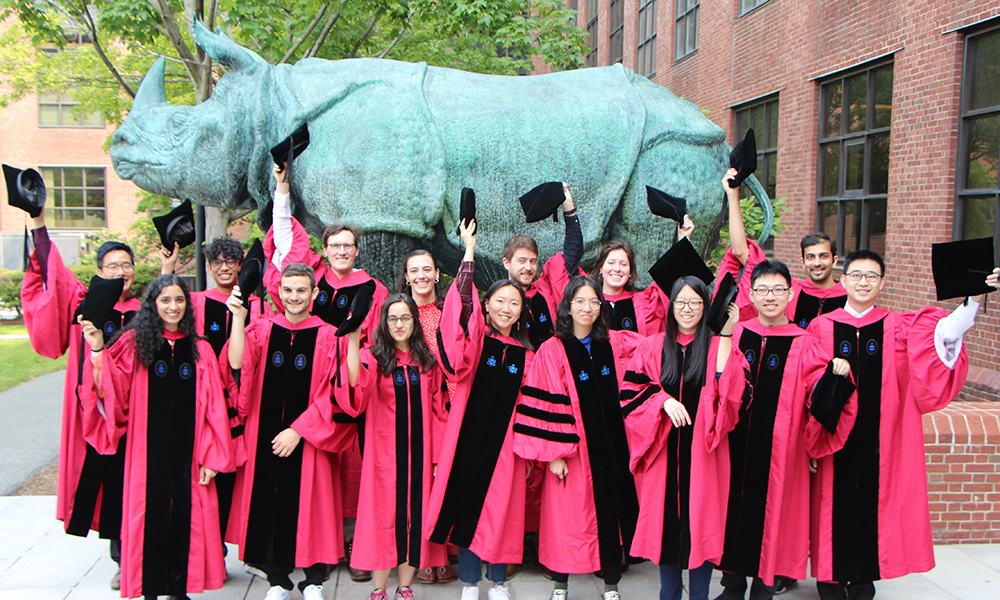

[caption]Link to full story[/caption] More about Kate's research and the Eddy lab [caption]Link to 2023 In Focus Commencement issue[/caption]
The Board of Tutors in the Biochemical Sciences has awarded the Henderson Prize to Yuen Ting Chow (MCB ‘23). Named for biochemist and Harvard professor Lawrence J. Henderson…
