The New York Times (April 10, 2014)

100 years biochemical sciences tutorial


The New York Times (April 10, 2014)
Microbes (including bacteria, viruses, fungi, and protists) are ubiquitous on earth and affect every part of our lives. Yet they are mostly invisible, and the vast majority…

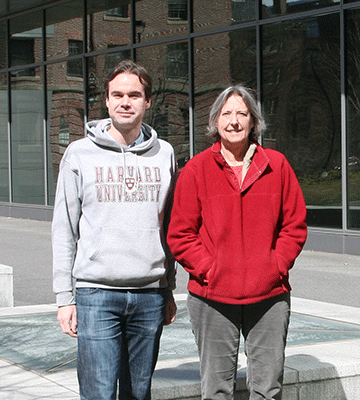
Chromosomal regions of identical or nearly identical DNA sequence can preferentially associate with one another in the apparent absence of DNA breakage and recombination. The genome-wide synapsis of…
Frances Arnold, Ph.D., will deliver the 2014 John T. Edsall Lecture, entitled "New Enzymes by Evolution: Expanding Nature's Catalytic Repertoire," on April 17. Arnold is the Dick…

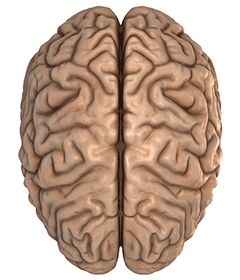
How do brains process sensory input and use these to choose or decide what to do? How similar is the brain activity in different individuals that are exposed…
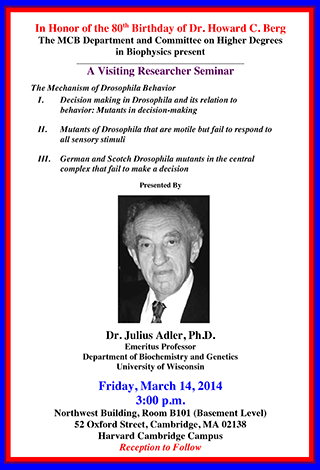
On Friday, March 14, 2014 at 3:00 pm, the Program in Biophysics will host a Visiting Researcher Seminar in honor of the 80th birthday of MCB faculty member…

(l to r) Theodore Betley, Karine Gibbs, Richard Losick (Chair of MCB), Eric Jacobsen (Chair of CCB), Emily Balskus, and Victoria D’Souza Karine Gibbs, Assistant Professor of Molecular…
Marc Kirschner is an outstanding cell and developmental biologists whose contributions to biology are matched only by his record of granting the intellectual independence that allow his students…


Secrets of the Brain By Carl Zimmer (National Geographic) A Voyage Into the Brain video (National Geographic) View Jeff Lichtman's Faculty Profile